Once the causes of execution risk have been agreed, the actions follow quickly: decision rights are rewritten, a new sales method is introduced, a leader starts coaching. Progress is then tracked by whether each action has been completed.
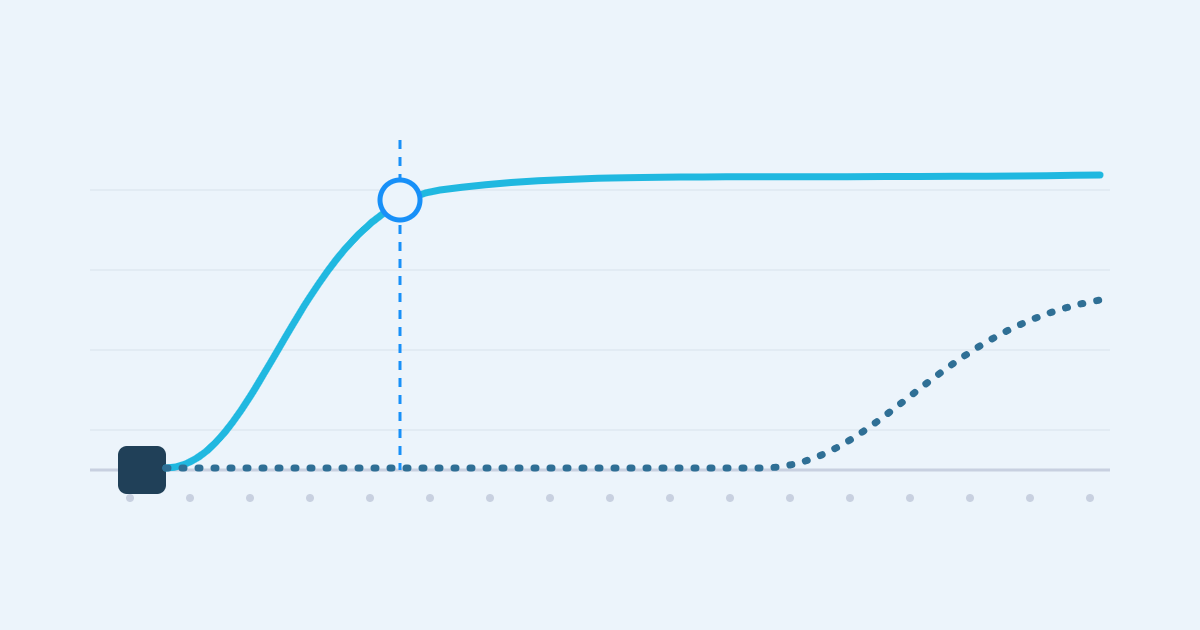
Completion is easy to report, but it says little about whether the constraint behind the action has moved. The results that would confirm it, such as revenue, margin and milestones, arrive a quarter or two later. By then, an action that isn’t working has used up much of the time available to change it.
Each action is aimed at a cause, so it needs a measure of that cause: one that moves within weeks rather than quarters.
Written decision rights. Track the share of decisions settled below the CEO and how long decisions wait. Both should move within weeks, well before the milestones that depend on those decisions.
A new sales method and CRM. Track the share of deals recorded in the CRM and whether the weekly pipeline review is actually held. These show within weeks whether the method is being used. Win rates and revenue will only confirm it a quarter or more later.
Coaching a leader to take on more. Track whether decisions in that area are now made by the leader, and how quickly. That shows progress months before it appears in the delivery of the initiatives the leader owns.
In a 2021 McKinsey survey of more than 1,000 respondents, 20% of the value lost in transformations was lost after implementation. Even organisations reporting success realised only 67% of the potential financial benefit.
In an illustrative case we have modelled, several changes started well and faded within weeks. A weekly pipeline review that ran every week at launch had stopped altogether. Check-ins on OKRs fell from 82% to 9% within five weeks. Expense requests drifted back outside the new workflow.
None of these changes had an owner for adoption, a measure or a review. The changes that held had one thing in common: the previous system or process was switched off, so there was nothing to go back to.
A simple early indicator for many changes: is the previous way of doing the work still available, and is it still being used?
For each action, agree in advance what should move, by how much and by when, and who owns it. Agree too what happens if it hasn’t moved: adjust the action, stop it, or go back and check the diagnosis. Deciding this up front makes stopping an action a planned step rather than an admission of failure.
Board packs usually report lagging results and the status of actions. A short set of leading indicators, one for each constraint the plan depends on, shows the board whether the fixes are working while there is still time to act.
Execution Radar sets a leading indicator for each action, with a point at which it is reviewed, and re-measures the organisation each quarter, so you can see whether the changes are working before the financial results do.
We help investors and leadership teams identify execution problems, understand their causes and make changes that improve delivery.